

Every surf forecast gives you four numbers and no advice. Wave height, period, swell direction, wind. People look at the height, decide it sounds fine, drive an hour and a half, and find something unsurfable.
However, the height is the least useful of the four. Here is how to read the other three, and what each combination means for which board you should have with you.
Period is the number that matters
Period is the gap in seconds between waves. It tells you how much energy is behind them, so it changes the meaning of the height completely.
Under about 8 seconds you are looking at local wind chop. It might say 1.5 metres, but it will be weak, disorganised and close together, and it breaks all at once rather than peeling. Around 10 to 14 seconds you have proper Atlantic groundswell, generated far away, arriving in ordered lines with real power behind it.
A metre at 13 seconds is a better and noticeably bigger wave than 1.5 metres at 7 seconds. If you learn one thing from a forecast, learn this one.
Direction decides which coast
Almost all swell here arrives from the northwest or west. As a result, it hits the west coast, the Costa Vicentina, straight on. It does not reach the south coast, because Cape St Vincent at the southwestern corner blocks it.
So a northwest swell means the west coast is working and the south coast near Faro is flat. That is the normal state of affairs, and it is why most Algarve surfing happens on the west.
The exception is a swell from the south or southwest, which is mostly a winter event. When one arrives it wraps in past the cape and the south coast beaches near Albufeira, Armacao de Pera and Faro pick up small, clean, gentle waves. Locals watch for it. Most visitors, however, never know it happens.
Wind decides whether it is any good
Wind blowing from the land out to sea holds waves up and makes them clean. In contrast, wind blowing from the sea onto the land flattens and disorders them. Everything else is detail.
In the Algarve the detail that matters is the nortada, the north to northwest wind that builds most summer afternoons. On the west-facing beaches it is cross to onshore, which is why the west coast is best at dawn and deteriorates from late morning.
But that same north wind is offshore on the south-facing beaches around Sagres, Mareta and Martinhal. This is the single most useful thing to know about surfing here in summer: when the west coast blows out at midday, drive fifteen minutes round the corner to the south side of Sagres and the wind is working in your favour.
Tide
Less critical here than on a reef coast, but not nothing. In general, most of the beach breaks work best somewhere around mid tide. Very low tide on the west coast often produces steep, fast, closing-out waves that are no fun for a beginner, and very high tide can leave nothing breaking at all at some beaches.
So check the tide table alongside the forecast and aim to be in the water on the push toward mid tide.
What this means for which board
This is the part forecasts never tell you, and it is the reason we wrote this.
| Under 1 m, period under 9 s | Weak and soft. Take the biggest board you can get on. An 8 ft or 8 ft 6 softboard will catch things a shortboard sails straight through. This is most of the summer. |
| 1 to 1.5 m, period 10-13 s | The good window. A 7 ft or 8 ft softboard if you are learning, a funboard or shortboard if you are not. This is a normal autumn day. |
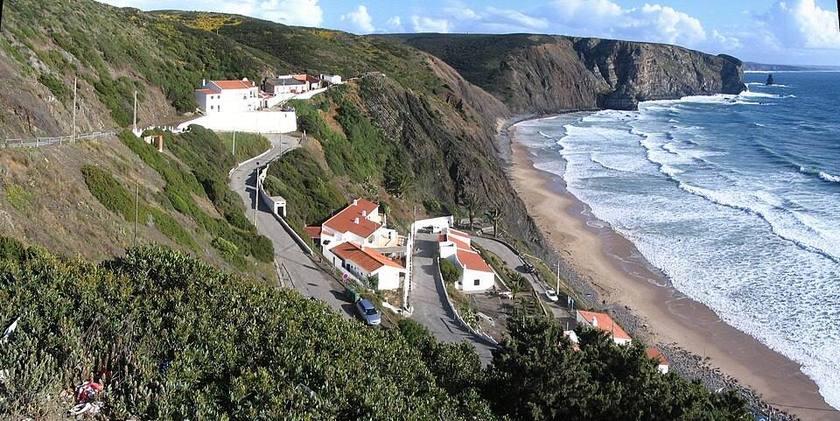
| 1.5 to 2 m, period 12 s plus | Powerful. Fine for confident surfers on a shortboard. If you are in your first season, go to a sheltered bay like Arrifana rather than an open beach, or move to the south coast. |
| Over 2 m at long period | Winter west coast. Experienced only. Everyone else should be at Sagres on the south side, or paddleboarding on the lagoon. |
The practical version: in summer, book the longer board. In autumn, on the other hand, the middle one. Most visitors take a board that is too small because it is the one they own at home, and then spend the week not catching waves.
Where to look
Windguru gives you swell height, period, direction and wind in one dense table, which is all you need once you can read it. Windy is easier on the eye and better for seeing where the wind will be at three in the afternoon rather than now. Surf-Forecast gives a spot by spot view if you want it broken down beach by beach.
Whichever you use, read period and wind first, height last.
Putting it together
Before you drive anywhere from Faro, ask three questions. Is the period over 10 seconds, which tells you whether it is worth the trip. Where is the wind coming from, which tells you west coast or Sagres. And what size is it, which tells you which board to have on the roof.
Which coast to aim for in which month is covered in our season guide, and what to wear in the wetsuit guide. For spot by spot detail on the individual beaches, our sister company Ocean Camper has a longer guide: surfing in Portugal.
If the forecast changes after you have booked, that is one advantage of renting rather than flying with a board. We are 1.5 km from Faro Airport and you can also swap to a different size on the day. Board sizes and prices are here.
Photo credits
Arrifana photo by Patrice78500, licensed under CC BY-SA 3.0, via Wikimedia Commons. Resized for this page.
Book your gear
Everything here is collected 1.5 km from Faro Airport, on the way in from arrivals. Pick your dates and check availability below.
Faro Surf Rentals
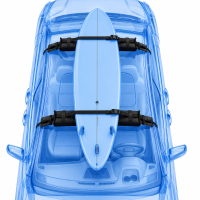
Carries up to 3 surfboards.
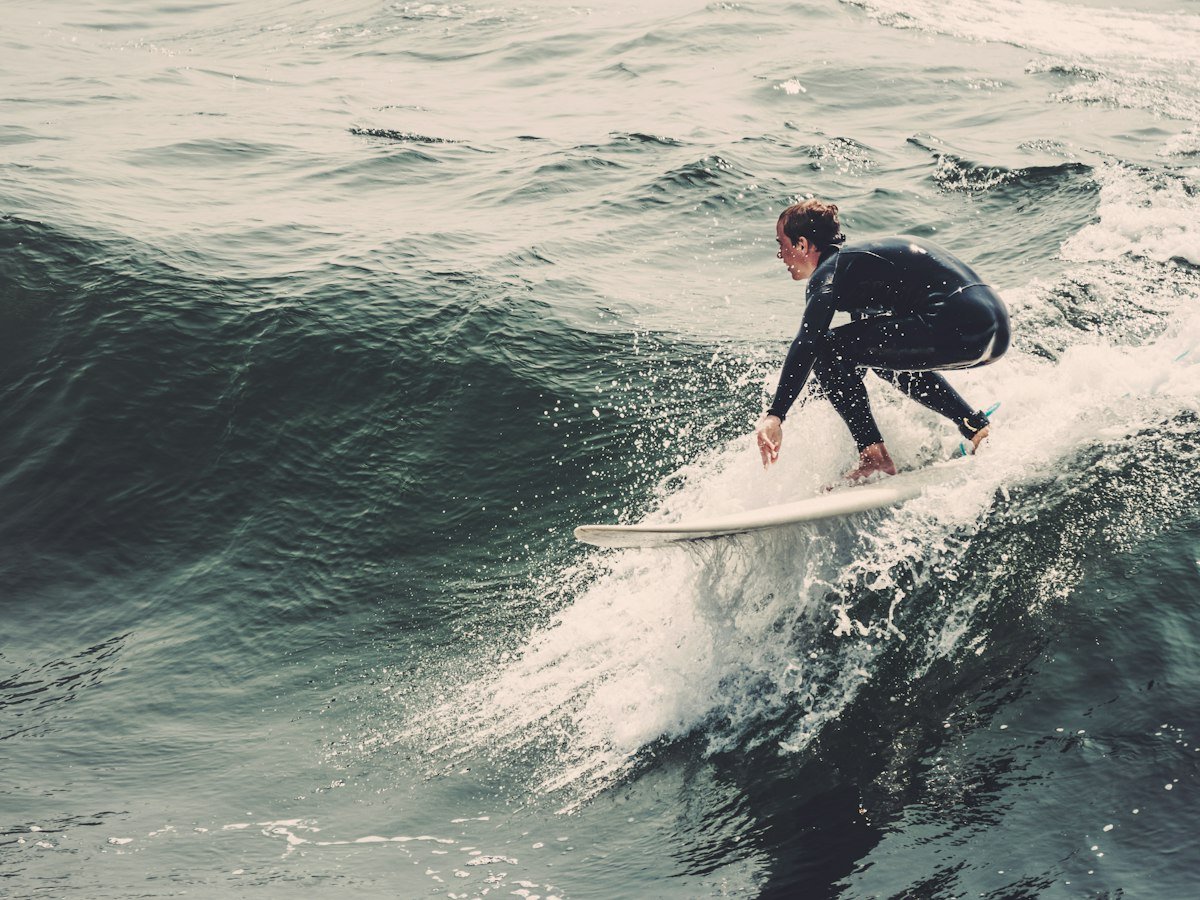
1 soft surfboard and 1 wetsuit for 28 to 30 days, November to March. For long stays in the quiet season.
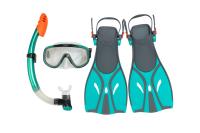
Snorkel set: mask, snorkel and fins (shoe sizes 37-38, 39-42, 43-45).


