

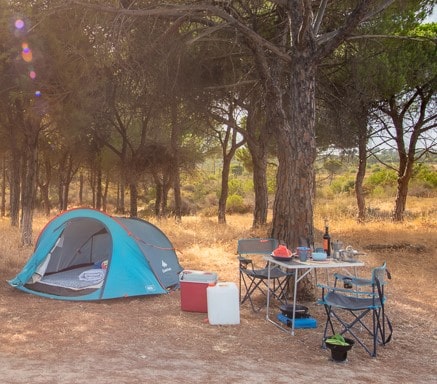
Most people pack for the Algarve as though it were a hot version of home. Then the wind gets up at two in the afternoon, the tent turns into a sail, and the pegs that worked fine in a damp English field pull straight out of dry sand.
Camping here is easy once you know what the place does to equipment. It is a specific combination: strong afternoon wind for months of the year, ground that is either baked hard or pure sand, fierce sun on the fabric, and nights that are colder than the days suggest. Here is what actually matters.
First, where you are allowed to pitch
A tent has to go on a licensed campsite. Portugal treats a campervan and a tent quite differently. A registered campervan can park overnight in some places under specific conditions, but putting up a tent outside a campsite counts as camping wherever you do it, and it is not permitted. Enforcement in the Algarve has tightened, particularly along the west coast, which sits inside the Southwest Alentejo and Costa Vicentina Natural Park, and the Ria Formosa is protected too.
Our sister company Ocean Camper keeps the detailed version of the rules up to date: wild camping in Portugal, the rules and the fines. For where to actually stay, they also maintain a guide to the best Algarve campsites for tents and vans. That saves us duplicating work, and it is better than anything we would write.
The good news is that Algarve campsites are cheap by European standards and several of the best ones sit right where you want to be, near Sagres for the west coast surf and at Fuseta for the lagoon.
Wind is the thing that ruins trips
From roughly May to September a north to northwest wind called the nortada builds most afternoons. It is not a storm, but it is persistent and it arrives every day, and it will find any weakness in a pitch.
What this means in practice: use every guy line the tent came with, not just the two that seem necessary. Pitch with the smallest end facing north or northwest. A tunnel tent pitched side on to that wind will flex all night and nobody sleeps.
Pegs matter more than the tent. Bring two types. Thin steel or titanium pins for hard, stony ground, because plastic pegs snap on it. And wide plastic or alloy sand pegs, at least 25 cm, for anywhere near the coast. On loose sand the reliable trick is to bury a peg horizontally, or bury a stuff sack full of sand and tie the guy line to that.
Sun does more damage than rain
Rain is barely a factor from May to September. Ultraviolet is. Cheap polyester flysheets go brittle in a single Algarve summer, and a dark tent becomes unusable by nine in the morning because the inside temperature climbs faster than you can get out of it.
A light coloured fly, a large mesh inner and doors you can roll all the way back are worth more here than waterproofing figures. Separate shade matters too. A tarp or a simple awning strung between the tent and the car gives you somewhere to sit at midday, which the tent itself will not.
Pitch so the tent is in shade in the morning if you can. Being cooked awake at seven is the most common complaint we hear.
The nights are colder than people expect
In July and August you will sleep on top of the bag. In April, May, October and November the temperature drops sharply once the sun goes, especially near the water, and a thin summer bag is not enough. A three season bag or a bag plus a liner covers the shoulder months comfortably.
Insulation underneath matters as much as the bag. Dry ground pulls heat out fast at night. A foam mat under a thin inflatable is a cheap fix if you already own the wrong mat.
Mosquitoes and condensation near the lagoon
Campsites around the Ria Formosa sit next to salt marsh, which is beautiful and full of birds and also full of mosquitoes at dusk in late summer. A tent with a proper sealed mesh inner is not optional there. Repellent for the hour around sunset handles the rest.
The same low ground gives you heavy dew. Pitch slightly off the lowest point, leave the vents open, and shake the fly out in the morning before packing.
Fire rules, which people get wrong
Portugal runs a Critical Fire Period through the summer, usually from the start of July to the end of September, and it can be extended either side in a dry year. During it, stoves, barbecues and grills are prohibited in rural areas except in places specifically authorised for it.
Campsites normally have designated cooking areas, and using a gas stove there is fine. Lighting anything outside one during the critical period is not, and the fines are serious. If you are unsure on a given day, ask at reception rather than guessing. Nobody in the Algarve is relaxed about fire, and with good reason.
What is worth renting rather than flying with
Camping gear is bulky, light and awkward, which is the worst possible combination for airline pricing. You pay for the volume, not the value. A tent, two sleeping bags and mats will typically cost more in hold baggage across a return trip than renting the same kit here for a week.
We rent tents, sleeping bags, mats, camping chairs and cooking kit, 1.5 km from Faro Airport, so you can collect on the way in and drop it back on the way out. Everything is chosen for these conditions rather than bought on price, which mostly means proper pegs and light coloured flysheets.
If you are also planning to get in the water, the same trip works for a surfboard or a paddleboard, and the wetsuit guide covers what you need in which month.
Book your gear
Everything here is collected 1.5 km from Faro Airport, on the way in from arrivals. Pick your dates and check availability below.
Faro Surf Rentals
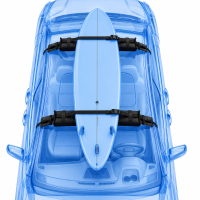
Carries up to 3 surfboards.
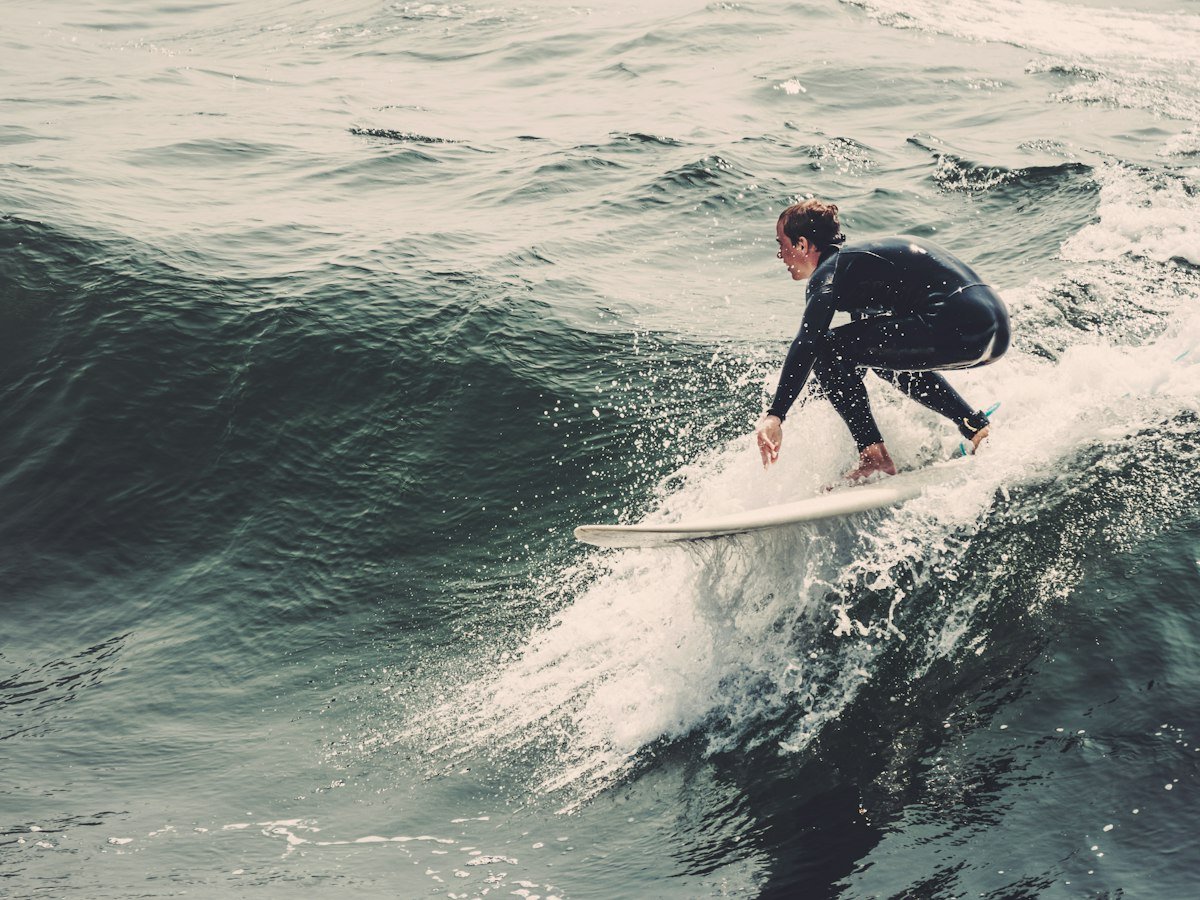
1 soft surfboard and 1 wetsuit for 28 to 30 days, November to March. For long stays in the quiet season.
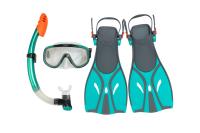
Snorkel set: mask, snorkel and fins (shoe sizes 37-38, 39-42, 43-45).


