

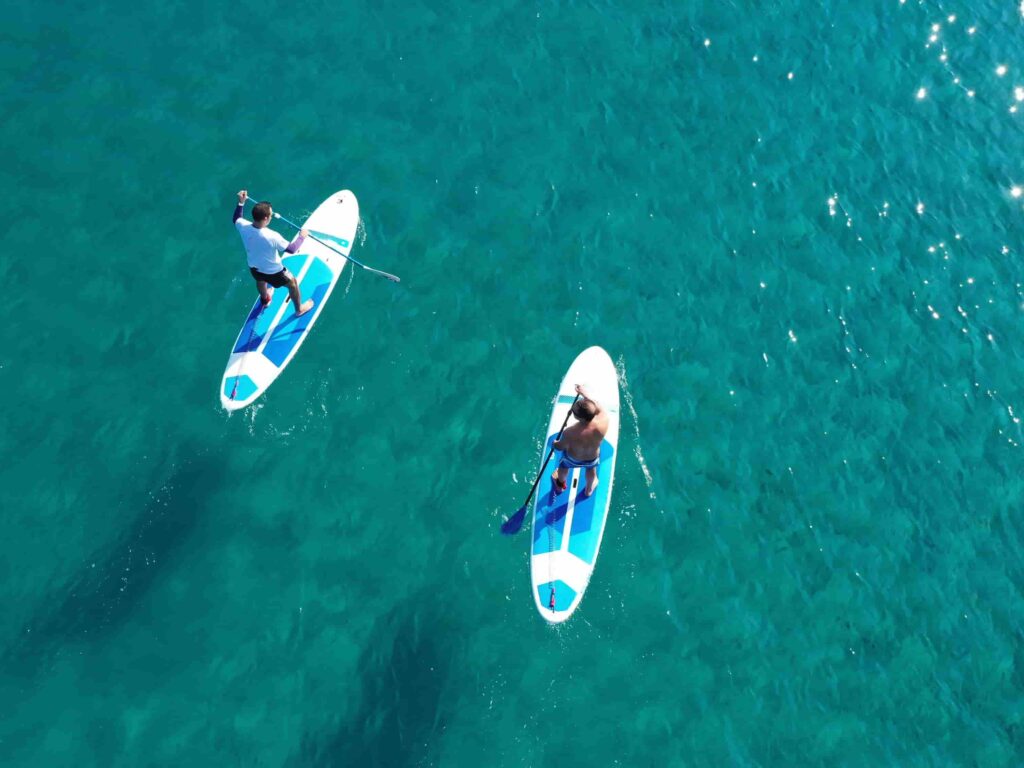
The Ria Formosa is the reason a lot of people end up paddling in Faro rather than surfing. It is a lagoon roughly sixty kilometres long, held behind a chain of sand islands, and it is almost entirely flat water. No waves, no shore break, warm in summer, and full of birds. For a stand up paddle board it is close to perfect.
It is also tidal, and that is the part visitors underestimate. Get the tide right and it is one of the easiest and prettiest paddles in Portugal. Get it wrong and you are dragging a board across a mudflat, or fighting a current you cannot out-paddle. This is how to get it right.
What you are actually paddling on
The Ria Formosa is not a bay. It is a system of channels, salt marsh, sandbanks and small islands, protected as a natural park, connected to the Atlantic through a handful of narrow inlets. Twice a day the ocean pushes in through those inlets and then drains back out. Because the openings are small and the area behind them is large, the water moves fast in the channels and barely at all over the flats.
The tidal range here is moderate by Atlantic standards, roughly a metre and a half on a neap tide and up to around three metres on a big spring tide. That does not sound like much until you see how shallow the lagoon is. At low water on a spring tide, large parts of it are simply not there.
The tide rule, in one paragraph
Paddle in the window from about two hours before high water to about two hours after. That is when there is water everywhere, the current is at its gentlest around the turn, and you cannot run aground on a bank you did not see. Then, whichever spot you launch from, head out against the current and come back with it. If you paddle out with the flow because it feels lovely, you will discover the problem two kilometres later when you turn around and it is still lovely, only now it is going the wrong way.
Check the tide table for Faro before you go, not for Lisbon or for the Algarve generally. High water at Fuseta and Tavira runs a little later than at Faro.
Where to launch
Praia de Faro, lagoon side
The closest option to Faro Airport, about ten minutes by car, and the one most of our customers use. The narrow strip of land carries the beach on the ocean side and the lagoon on the other. Launch on the lagoon side, near the bridge, and you have flat shallow water immediately. Good for a first paddle. Parking is genuinely difficult from July to early September, so go early.
Fuseta
If you only paddle one spot, make it this one. Fuseta sits about thirty minutes east of Faro, and the lagoon arm in front of the town is sheltered, shallow and warm, with a sandbank beach you can land on. It is the friendliest water in the whole system and the town itself is still a fishing village rather than a resort.
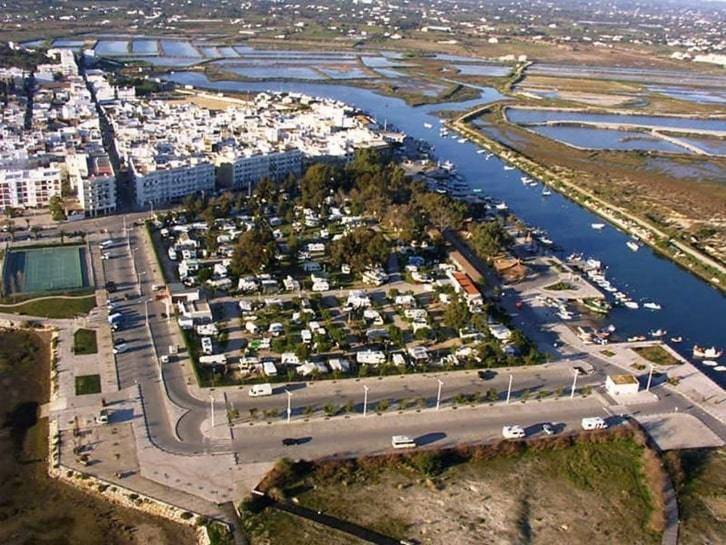
Cabanas de Tavira
About forty five minutes east. The channel between the village and Cabanas island is narrow, calm and very shallow, which makes it the least intimidating launch on this list. Cross to the island, walk over to the ocean beach, paddle back. It is a good outing with children.
Olhao
Fifteen minutes from Faro, with the widest choice of destinations, because Armona and Culatra are both out there. It is also the busiest with working boats and has proper channels with real current. Worth doing once you are comfortable, not on day one.
Santa Luzia and Praia do Barril
Quieter than everywhere above, about thirty five minutes east of Faro. Santa Luzia is the octopus fishing village, and the water in front of it is calm and unhurried. This is where you go if you want to see almost nobody.
Wind matters more than you expect
The lagoon is glass in the morning. From roughly midday onward in summer, a north to northwest wind called the nortada builds, and on an open stretch of lagoon it will push you around on a board with no keel. If you launch at eight or nine in the morning you get flat water and better light for the birds. If you launch at three in the afternoon in July you get an upwind slog home.
This is not a small effect. It is the second most common reason a Ria Formosa paddle goes badly, after tides.
What you will see
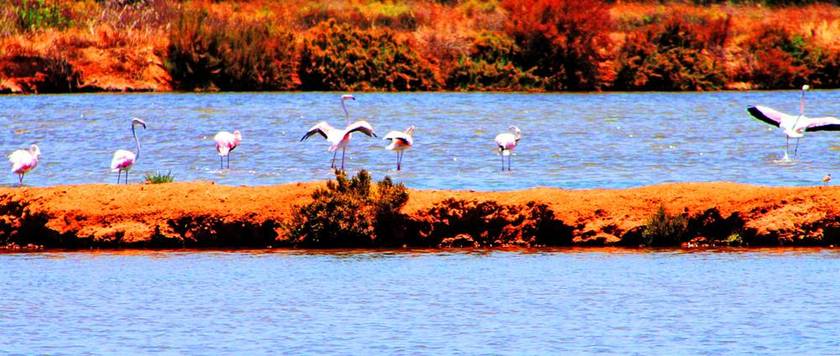
Greater flamingos, most reliably from autumn through spring, in the shallow salt pans near Faro and Olhao. Spoonbills, avocets and little egrets year round. White storks nesting on chimneys and pylons along the shore. Fiddler crabs in their thousands on the mud at low water, the males waving one oversized claw. The lagoon is also one of the more important seahorse habitats in Europe, although you will need clear water and a slow drift to spot one.
Two things to keep off. The oyster and clam beds are working shellfish farms, usually marked with poles or trestles, and paddling or standing on them causes real damage and real annoyance. And the dune areas on the islands are nesting ground for terns and plovers in late spring and summer, so land on the beach, not the dunes.
What to take
A leash, always, even on flat water. A buoyancy aid, especially if you are crossing a channel. Your phone in a dry bag. Water, because there is no shade out there and the reflection off the lagoon is stronger than it feels. A tide table, checked before you launch rather than remembered from yesterday. And tell someone where you are going, which sounds excessive until you consider that at low tide a large part of the lagoon has no boat traffic at all.
Renting a board
We are 1.5 km from Faro Airport, so a board can be collected on the way in and returned on the way out. Inflatable boards, paddles sized to you, leash and buoyancy aid included, and roof straps available to rent if your hire car has no rack.
Prices, sizes and pickup details are on the SUP rental in Faro page. If you are coming in the cooler months, a wetsuit makes a January paddle on the Ria a lot more pleasant than it sounds.
Book your gear
Everything here is collected 1.5 km from Faro Airport, on the way in from arrivals. Pick your dates and check availability below.
Faro Surf Rentals
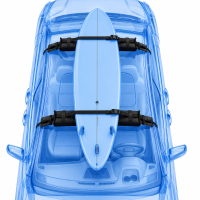
Carries up to 3 surfboards.
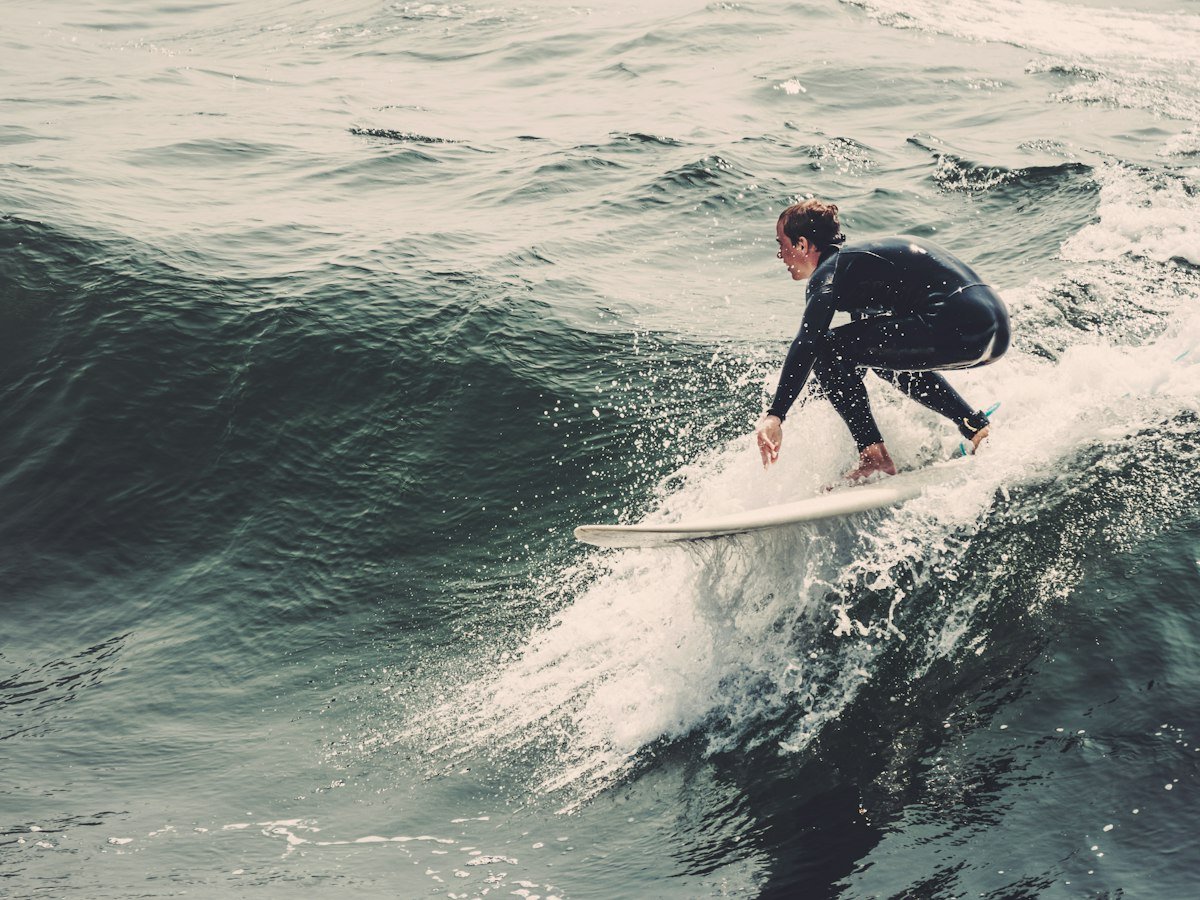
1 soft surfboard and 1 wetsuit for 28 to 30 days, November to March. For long stays in the quiet season.
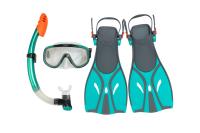
Snorkel set: mask, snorkel and fins (shoe sizes 37-38, 39-42, 43-45).


